From Dashboard to Delivery Content Automation
Endless dashboards, reports, and alerts are all part of the frustration felt by every marketing team. While this data pr...



The Scripted Podcast is a show created for content marketers and content writers featuring real Scripted writers. We'll talk about best practices in content and SEO, our favorite marketing tools, how to find and hire writers, and all the fun and misadventure that comes with being a professional freelance writer.
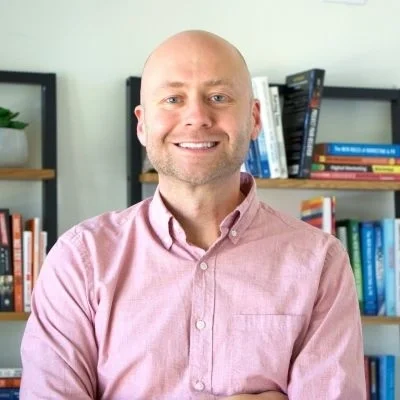
In this episode of The Scripted Podcast we sit down with Scripted writer Brian Penny to talk content promotion, evergreen vs. topical content, and content writing tools. Brian has been a professional writer for over 10 years, working as a content marketer, blogger, and ghostwriter for technology, business, money, marketing, and a variety of niche topics, such as cannabis, cryptocurrency, virtual reality, and more. Listen below!
Gregory: [00:00:24] I am here with Brian Penny, and we're going to be talking about creating shareable content. And we're gonna dive deep into this and specifically talk about how to share really shareable content on different mediums such as Twitter, LinkedIn, Facebook, Instagram, and things like that. He has a lot of experience. And I'll let him talk a little bit more about this. Brian, glad to have you on the show. Can you talk a little bit about why you have an authority on this type of topic and more about your background?
Brian: [00:00:53] Sure. Glad to be here. I've been writing for 10 years professionally. I mean, I've been doing it at school and other things like that. But I mean, for the last 10 years, I've been doing it, very focused on online writing and I have it from two ends. There's the blog owner, part of it where I own my own blog. And there's also other blogs I am writing for as my own self. As my public face. My byline. And then there's ghostwriting that I do, which is me taking on the voice of other clients, which can kind of go all over the board on here and doing the writing for them. So, I mean, basically, I've seen the art and science of it, both of them on the other end of writing, like a mechanical writing of English versus, you know, how this applies to online and getting people to read what it is that you're talking about.
Gregory: [00:01:37] So obviously, a ton of experience, a lot of different angles that you're approaching writing from. I want to start digging into this discussion. But to start off, I want to talk a little bit about, you know, covering the topic of what shareable content is. And if you want to start just highlighting a little bit more about what makes content more shareable than another piece of content.
Brian: [00:01:59] For sure. Right now, the coronavirus is the best possible example to use for all of this.This is when you look at the timeline of what happened in 2020. We had around February, if you knew anything about COVID-19 in February of 2020, you were the man. You were on top of everything. You were ahead of this. Everybody wanted to know. We were all kind of going into this one thing together. And it was important because it was kind of a shared experience that everybody has. In order for your business to exist. You had to talk about Coronavirus. It was the IT Girl of the day, basically. And that's a big key of kind of getting your content out there basically is making sure that you're hitting the right buttons, that you're talking about something as relevant to what we're all going through right now.
So at that time, if you were not talking about Coronavirus, especially going into March when everything started, like the President's on every day talking about this, everyone is getting locked down. We're all finally being affected by this thing. You had to have something up by that point. And when you're writing shareable content, the biggest thing is to make sure that you're reaching the biggest audience possible with the most relevant content. And that's what it was. But with Coronavirus, we also see the other end of that, which is kind of a topic burnout, because by the time we got into April and even right now, today, I don't know anybody that could even stomach reading about the virus anymore.
Brian: [00:03:04] We have all reached peak, like whatever I needed to know about this virus. I know I don't need to know anymore. I'm not working on the cure. Well, that's kind of how a lot of us I mean, the Coronavirus is a quick, easy example to use, but it represents a lot of things. It's at what is the topical versus evergreen aspect of this, which is you do need to be topical to get people to read stuff. But when you're building an audience, for example, when you pick up a small business and you have nobody reading what you're doing, there's no point in doing a lot of stuff on something like the Coronavirus, because by the time everyone goes through this whole plays itself out, no one's really going to see what you did. And it's gonna be old by that point. You have to find something new. And this balance is kind of this balance between evergreen and topical is one of the big things that I talk to a lot of my clients about is that you have evergreen subjects like what a tree is, for example, the kind of evergreen that it's a scientific subject, like the encyclopedia thing that is always going to be a tree is always gonna be a tree, essentially.
Brian: [00:03:57] And then you have something that's more topical. Like what? Trees are being burned down and whatever is going on today and balancing that is really the key to the content itself of what content you're creating. It has to be something that kind of fits in both. That it has to fit in what we're doing right now so that it's relevant to what I'm doing today. It has to catch my attention, but it also has to be something that 10 years from now, it's still somewhat relevant in some way so that you're not having to spend your entire time constantly staying on top. I mean, the news is a whole business in itself. Those who could easily get lost, constantly trying to keep up on what is going on and pick a subject. But that balance is, I think, personally, the number one key ingredient. To always focus on making sure that you're starting by writing about the right thing in the first place.
Gregory: [00:04:44] So I'm curious, do you happen to know of some tools that help people figure this thing out, instead of like just scouring the news and stuff like that?
Brian: [00:04:53] Yes. I mean, there's an intuitive part of it when you're looking on your own. But there are. I use tools all the time. I make it sound like something is easy. A lot of times I want to talk about this thing. It's going to sound like it's super easy. It's only because I've been doing this for ten years. So, I mean, automatically, whenever I'm working with keywords, you pull that up and you can throw that into just a starter free tool like Google Trends. It's a keyword trending tool, which is the first place I start for anything, because Google is the biggest search engine. So Google is the place that I mean, you obviously want to see what people are looking for. You want the biggest dataset also. And it's a good place to just put a keyword in there. Basically, what it does is tell you kind of what related things people are searching for around that topic.
Brian: [00:05:45] So it's very good, especially if you don't really know how to approach the topic that you're going for or really what you can contribute to that conversation. Pulling that up there can kind of give you a key trigger of like, well, I didn't realize people were looking for this particular thing, and that's just the start of it. I mean, it goes in very deep. There's another one I use a lot called SEMrush, it's a competitive analysis tool also. So what that does is when you're putting the topics in there, first you could put your own website on there and see kind of who you're ranking against and kind of get an idea of who your competition is. And when you have a subject that you want to write about, you could stick in there and see who's ranking high for that subject. And you can go and look through and see what it is that they're doing when you don't know what you're doing yourself. But I mean, that's the easiest way, is to basically model what you're doing off of what's already working.
Brian: [00:06:41] So if you see something that's already ranking number one, I mean, obviously you're not going to go through it and plagiarize the whole thing, but it gives you a general idea of how they're approaching it and gives you something. You could really see a lot of information just by it, by doing that competitive analysis and those keyword analysis alone. And beyond that, I mean, there are paid tools that you can pay for on SEMrush. There's a lot of pro tools on there. There's a lot of tools that you can go through that'll get even deeper into this, that'll start telling you the competition. But for the words in very visual ways of like if something is like only a thousand people a month ever look at it. But it's very highly competitive, that it's something that you don't really need to waste your time on, because there's already more than a thousand people that have answered this and there's just not that many people looking for it, versus something that has a million views and only a handful of people have done it, then that's something that you definitely want to focus your your writing on.
Gregory: [00:07:35] Right, that makes a ton of sense. And I like that you brought up this whole idea of competitive analysis, because you're right, if it allows you to go in there and not only see the type of topics they're talking about, but how they're talking about it. Are they including videos along with the content images? How long are the posts? Things like that. And that kind of segues into what I want to jump in next, is what type of content is more shareable? It obviously depends on the industry and things like that. But maybe from your experience, what do you typically see gets shared more? Long form, short form?
Brian: [00:08:03] You know, towards that one hundred percent, the more visual you get into something, the more shareable it gets. I've been writing for a long time and I can tell you that no matter how popular a blog is, it's never going to be as popular as a video. It's just the way that it is. There's a small percentage of people that can read, that choose to read and that are going to read what it is that you're writing. So you're narrowing it down very quickly versus video that just hits everywhere. And even when you're reading, I mean, there are differences. There are just certain things where a short answer, like a definition, if you're looking up a definition, for example, of like what is SEO just a quick like SEO means this is an easy thing to kind of get on the front page of Google. But if you were actually, you know, an SEO specialist and you're trying to learn specific things within the SEO strategy type of thing? That's a very long form article. Honestly, that's a whole series of e-books that people can make a career off of.
Brian: [00:08:59] In all reality, you have to know first your conversion funnel, where you're at, where you're in, where you're reaching, I guess, the customer in their particular path and make sure that you're covering what it is that you need to cover for your branding. Basically, it's like I'm a writer and I don't care either way. Like, I'll write a short version or longer. If you told me to write a story about SEO, I'll do it whatever, whatever you want. I can make it a two word answer. I can make a million word answer, but it's for your business.
What is it that you need to give this person? What information do you need to give them basically to satisfy their need for their connection with your brand basically is what the real question is on. That is how much do you have to give them? And I mean, I always err on the side of visual, the more infographics you could put up, the more stats you could put up, graphs, anything like that. That's the kind of stuff that is shareable with the people who understand it. Basically like the general consumer will just read something. But, somebody who's like an influencer in whatever industry you're trying to reach. Those people, they live for that kind of stuff. Like I live for data as a writer. I live for any kind of data. If you're trying to tell me something and you don't have numbers to back it up, like you're wasting your time, I'm going to immediately Google to start looking for the research so you can provide that data in a digestible format. You're inserting yourself in a very good place. The more visual data that you could throw into anything that you're creating is easily going to help its share-ability, exponentially.
Gregory: [00:10:32] Yeah. I think there's just this underlying current of writing for your audience. Understand who you're writing for.
Gregory: [00:10:38] And that's going to wrap up this part of our discussion. So I just wanted to recap this episode. The biggest key to writing extremely shareable content is to balance topical versus evergreen, especially when you're first starting out. Finding that balance is needed to make sure you reach the biggest audience possible. So to write something shareable. Make sure your content is addressing something that is relevant to the times while also providing evergreen content in the mix that will still prove relevant ten years from now. Something to note about this is that you want to avoid topic burnout. So obviously, for example, no one wants to read anything about COVID-19 anymore.
Make sure that you're avoiding something like that by checking out Google Trends. It's a great place to start your keyword research and find out what people are searching for. It will also help you understand how you can approach that topic of conversation in your own unique way. Another tool we can use is SEMrush, which is a competitive analysis tool. To start using that, put your website in to see who your ranking is against. And once you understand what your competitors are writing about, model what's already working. The second major key to creating shareable content is to make it visual. When it comes to the medium of content, the more visual your content is, the more shareable it is. So to start, understand your customer and cover what you need to cover for your brand. Ask yourself what my audience really cares about? Capture that meaning in a visual of some kind. So if your audience is composed of influencers within a given vertical, use more stats or input graphics related to that vertical that they would actually care about. And that about wraps this episode up. I
n the next episode, we're gonna be covering how to write content for specific social media channels such as LinkedIn, Facebook, Instagram and Twitter , and how to actually share content across those channels effectively.
Hire a Brian P. to write your SEO content today! Start your 30 Day Free Trial now!