
5 Content Types AI Shouldn’t Write Alone
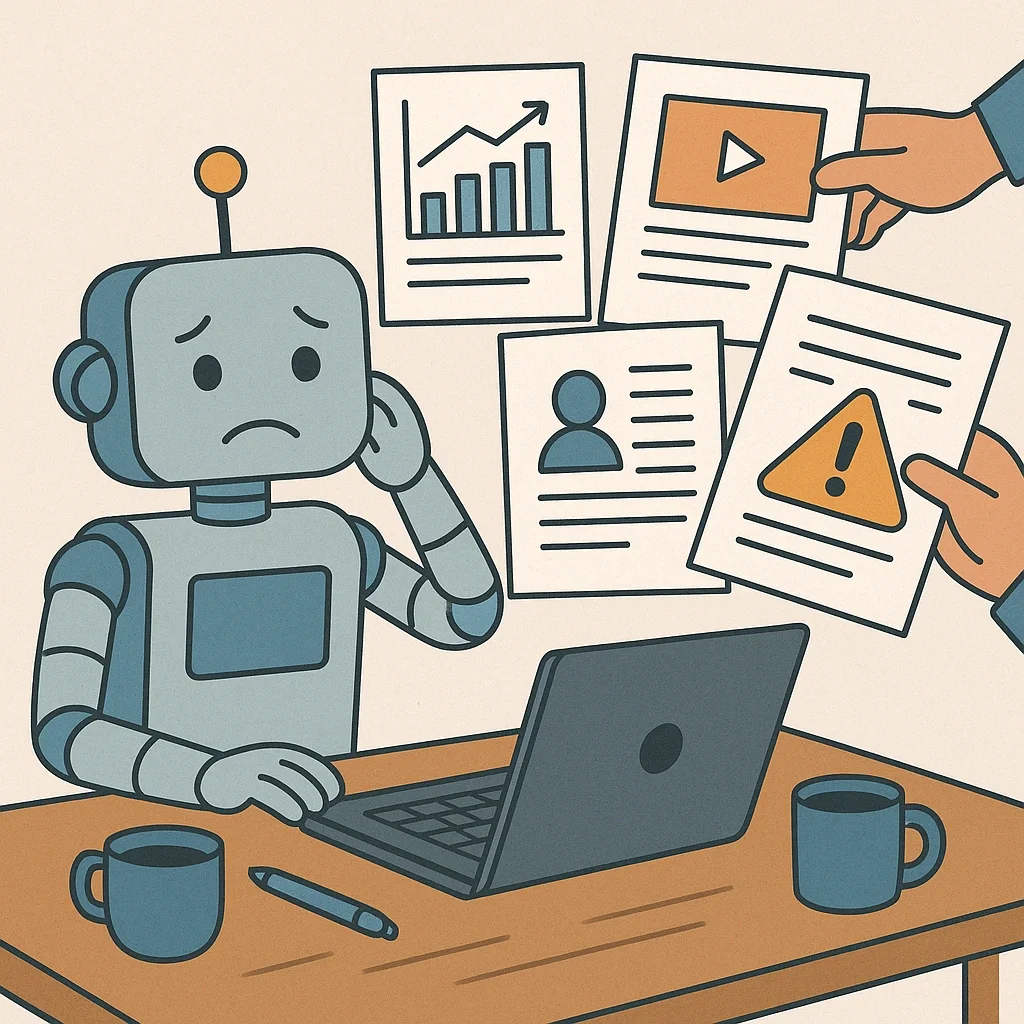
If you feel increasing pressure to publish more content, more quickly, you're not alone. Artificial intelligence (AI) pushed content production into hyperdrive. However, speed without guardrails comes with risk. In marketing, this surfaces as bland thought leadership, questionable claims, tone-deaf messaging, and erosion of brand trust.
In reality, AI isn't dangerous. What's dangerous is automation without judgment. Automation is powerful for scale, structure, and synthesis. Today, the best content is co-created. AI accelerates production, while humans provide taste, accountability, and context. Don't choose one or the other. Instead, recognize when each belongs in the driver's seat.
Below are five types of content AI should not write alone, along with the guardrails that keep your brand safe. Think of this as your content “traffic control system," telling you when to set cruise control, when to keep a human’s hands on the wheel, and how to do both without slowing down.
A Quick Pre-Check: The Guardrail Scorecard
Before publishing any content, it should be evaluated for risk. Pieces that involve regulation, brand-defining opinions, original data, emotional sensitivity, fast-changing facts, or competitive claims require closer human oversight.
When two or more of these factors are present, the content should shift from AI-led to hybrid or human-first production. This simple triage prevents avoidable mistakes while preserving efficiency. Still, this basic rule isn't enough to identify all content that should be human-led.
Beyond triage, the following five content types require human oversight. Here's what that oversight should look like.
1. Executive POV and Thought Leadership
AI excels at summarizing pre-existing information. However, thought leadership requires an original perspective, lived experience, and a willingness to challenge conventional wisdom. Left alone, AI will flatten nuance into agreeable but forgettable takes. This can weaken brand differentiation and credibility, especially when targeting senior audiences.
Effective guardrails start with human input. Short executive interviews provide real anecdotes, convictions, and language that cannot be fabricated. AI can help structure the draft, highlight key themes, and suggest headlines aligned with the leader’s stance. Critically, final approval must come from the bylined executive to ensure accuracy and accountability.
When content introduces a new framework, defines a category, or includes attributable quotes, human ownership is essential. AI can support the process, but it should never define the point of view.
2. Regulated, Legal, or High-Consequence Content
In regulated industries, precision is non-negotiable. Small errors in healthcare, finance, legal, or safety content can lead to compliance issues, user harm, or reputational damage. AI can overgeneralize guidance or misapply jurisdiction-specific rules. Put simply, unchecked automation becomes extremely risky.
Strong teams rely on a centralized claims library containing approved, citation-backed statements with clear ownership and review dates. AI can assist by organizing dense material or translating expert notes into plain language. Still, subject-matter experts must verify claims before publication. Displaying update timestamps and appropriate disclaimers is also critical.
If a piece could influence a medical, financial, or legal decision, direct human review is non-negotiable.
3. Product Pages, Pricing, and Competitive Comparisons
Product content isn't just information. It's a system of persuasion. Small inaccuracies in feature descriptions, pricing language, or positioning can materially affect revenue and legal exposure. AI is particularly risky in this area because it may invent features, imply superiority, or soften important qualifiers.
Guardrails include a locked message house that defines core promises, proof points, and boundaries. Let AI generate variants for testing, FAQs, or SEO metadata, but all factual inputs must come from a single source of truth. Competitive comparisons and superlative claims require careful qualification and legal review.
When pricing changes, promotions launch, or “us versus them” pages are involved, humans must own the final draft.
4. Sensitive Topics and Crisis Communications
Crisis communication is where automation breaks down the fastest. In situations involving layoffs, outages, security incidents, or social impact, empathy and accountability matter as much as factual accuracy. Generic language can feel evasive or insincere. This can escalate rather than resolve a situation.
Effective guardrails require visible human ownership. A named leader should be responsible for the message and use direct, plain language. They must explain what happened, what is being done, and what comes next. Legal, HR, and communications teams should review tone and substance before release.
AI can assist after a human-approved core statement by adapting language for different audiences or summarizing technical details. However, apologies and commitments must always be human-authored.
5. Original Research, Case Studies, and Customer Stories
Original research demands rigor and transparency. AI can invent data and generate quotes that were never said, destroying a brand's credibility. Case studies are relationship-driven content where consent, accuracy, and nuance matter as much as narrative flow. Customer stories? They have to come from the source.
You can't trust artificial intelligence with any of these. Human guardrails should include documented methodology, preserved raw data, and explicit approval for customer names, quotes, and metrics. Let AI structure long transcripts, surface themes, or assist with exploratory analysis, but humans must interpret results and shape the story.
Any content labeled as a study, benchmark, or customer success story requires clear human accountability.
How to Operationalize Guardrails Without Slowing Down
Scaling safely doesn’t mean restricting AI. It means routing content intelligently. High-performing teams classify content by risk during planning, deciding whether execution should be AI-led, hybrid, or human-first.
Claims libraries, transparency logs, and post-publish performance reviews allow teams to refine guardrails over time. When content underperforms or creates confusion, that feedback signals the need for increased human involvement in future iterations.
The Bottom Line
AI is exceptional at accelerating repetitive work, synthesizing existing knowledge, and structuring complexity. Still, humans remain essential for judgment, originality, and empathy. The future of content isn’t AI versus human. Rather, it’s AI plus human, supported by guardrails that protect trust while enabling scale.
Teams that establish those guardrails now will move faster with fewer missteps, earn deeper audience trust, and focus their expertise where it matters most: creating ideas that only humans can truly own.