The Psychology of Trust in AI Content
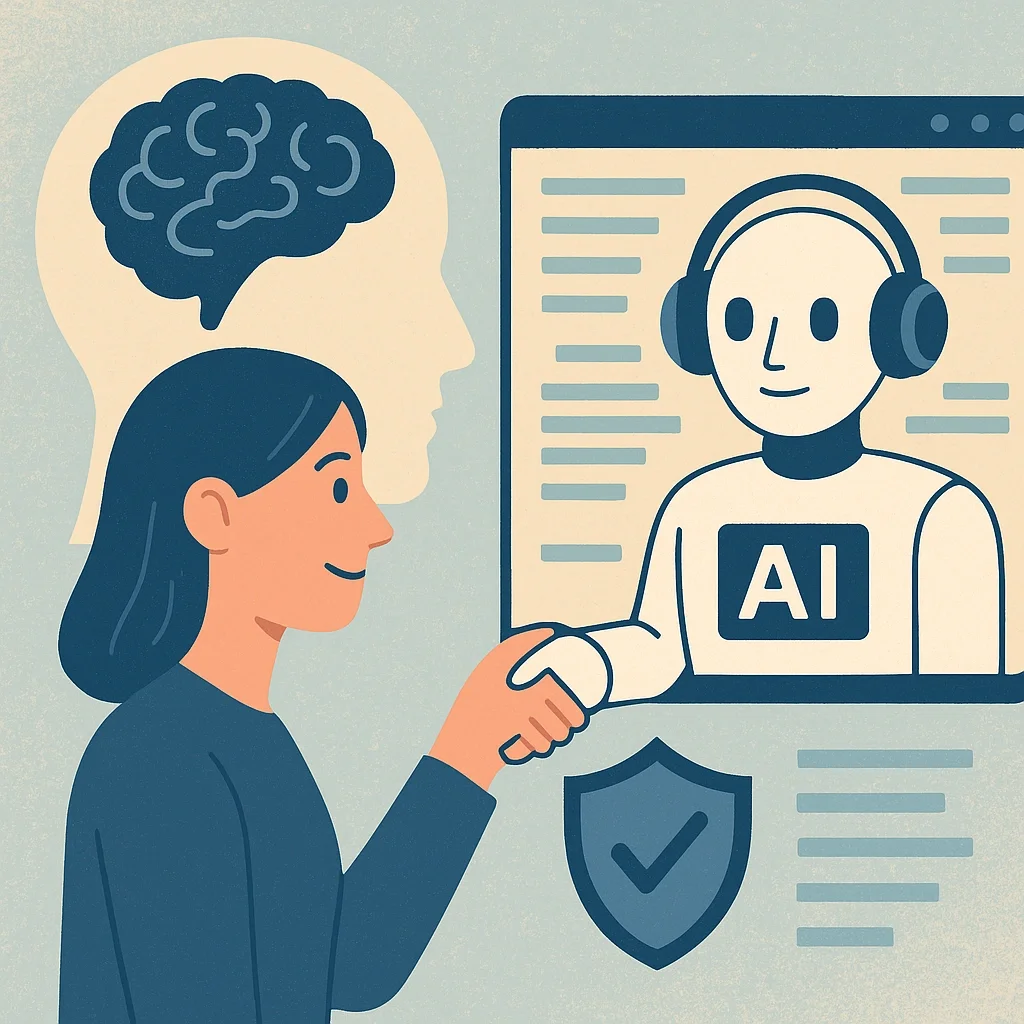
There’s a conflict in modern marketing between what marketers think audiences want, and what they actually want. Your audience wants helpful, credible, and entertaining content. Marketers think AI is the way they can produce that content at scale. The disconnect occurs when consumers reject potentially untrustworthy AI-generated content.
The good news is that, once you understand how consumers judge credibility, you can design content strategies that earn trust. Hybrid creation is the game-changer: AI intelligence plus human creativity.
What readers are actually evaluating when they read you
Whether they realize it or not, readers are consciously scanning for signals that answer four primary questions:
- Do you understand my world? The content needs to be relevant and provide examples in contexts that the reader will understand.
- Do you know what you’re talking about? Provide evidence and citations, be specific, and lean into the right level of nuance.
- Are you being straight with me? Offer transparency about sources and avoid uncertainty.
- Are you being consistent? Stick with a recognizable brand voice and consistent claims.
Psychologists talk about the “Elaboration Likelihood Model” or ELM, which is tied to persuasion tactics; the core of marketing. ELM considers both the core idea and peripheral messages of your content, with aspects like brand familiarity and an authentic voice heavily influencing how positively they receive that content.
Why some AI content feels untrustworthy, even when it’s factually correct
AI-generated content, unfortunately, is often received poorly due to two trust paradoxes:
- The fluency paradox: Smooth, well-structured prose often reads as credible. But if it’s too smooth without the scuffs of human judgment or the nuances of human voice, content can trigger the opposite reaction. In other words, it tumbles into the uncanny valley of prose.
- Algorithm aversion vs. automation bias: Some readers will immediately discount content when they suspect it’s machine-generated, while others may assume that overly polished content is factual when, in fact, it may not be.
Subject matter experts (SMEs) know what to highlight and what matters less to the reader. AI? Not so much. The reliance on large language models (LLMs) means the content is generated using existing data only, with no new or original insights.
What reliably builds trust, with or without AI
Regardless of who drafts that first sentence, trustworthy content tends to do the same things:
- Show receipts: Links to primary sources, named studies, datasets cited with dates
- Be specific: Use of numbers, steps, names, and examples grounded in the reader’s industry
- Preserve voice: A consistent brand personality and tone
- Acknowledge uncertainty: Trade-offs and risks included
- Add lived experience: Quotes from practitioners and author credentials.
- Stay current: Time-sensitive facts highlighted; facts updated as necessary
Above all, trustworthy content is transparent. Recent statistics show that ads that gave a disclosure of AI usage experienced a 73% lift in trustworthiness for the ad itself, but a dramatic 96% increase in trust for the brand posting the ad.
How Scripted instils trust from the ground up
At Scripted, our mission is simple: AI intelligence. Human creativity. Unified execution. We’ve built our platform around how audiences actually judge credibility, so you don’t have to choose between speed and trust.
Here’s how we ensure authenticity at every step.
1) Strategy that already knows your world
Scripted offers AI-driven strategic analysis that is trained on your site, your competitors, and your industry. That gives you the confidence that your new editorial calendar begins with relevance: topics, angles, and formats your audience is actually looking for. It’s about working on trust before a single word is written, by choosing the right conversations to join.
2) The right writer for every job; sometimes human, sometimes AI, always intelligent
Content creation requires nuance, and not every piece needs the same treatment. Some topics demand lived experience. Others may benefit from AI acceleration.
Your AI strategist determines which assignments need to be:
- Human-written for depth, perspective, and voice
- AI-written for speed and consistency in repeatable formats
- Hybrid-created, using an AI draft plus human refinement to add evidence, tone, and brand context
The result is an overall strategy that drives both quality and efficiency.
3) Human verification on every AI-assisted piece
Every AI-assisted piece has human oversight. No exceptions. Your content gains empathy combined with ensured accuracy, areas where most generic AI content falls short.
4) Voice that doesn’t get overwritten by AI
Your content fingerprint is unique. Our system preserves that voice across multiple channels and platforms, building brand trust and loyalty.
5) Real experts, real accountability
Our network includes thousands of vetted professionals across just about every industry and sector. When a byline claims expertise, it’s backed by experience.
What this looks like in practice
Let’s take the example of a cybersecurity company planning next quarter’s content.
- The “strategist who never sleeps” identifies questions CISOs are asking now, gaps competitors haven’t covered, and high-intent queries worth tackling.
- The system assigns thought leadership and nuanced pieces to human writers. Routine updates like release notes and basic glossary entries are assigned to AI, with human oversight.
- Writers and editors add relevant context, cite current sources, and weave in anecdotes from relevant client scenarios.
- Each piece is published with a provenance note and any necessary update stamps.
As engagement data rolls in, the content calendar uses this to shift toward the formats and voices earning the most trust signals and engagement. The result is a content library that feels both authoritative and organic.
A Hybrid Content Strategy Wins the Long Game
AI doesn’t earn trust. People do. But AI, orchestrated well, gives people the time and tools to do it consistently.
Ready to build trust at scale? Get started with Scripted today.