Hybrid Content Builds Trust in the Age of AI
In the age of AI, everyone can publish faster. But as much as that is a blessing, it is also a burden. Readers are questioning every piece of content they encounter, wanting to know whether a bot indeed wrote it. Now that trust is the new currency, output is no longer the constraint.
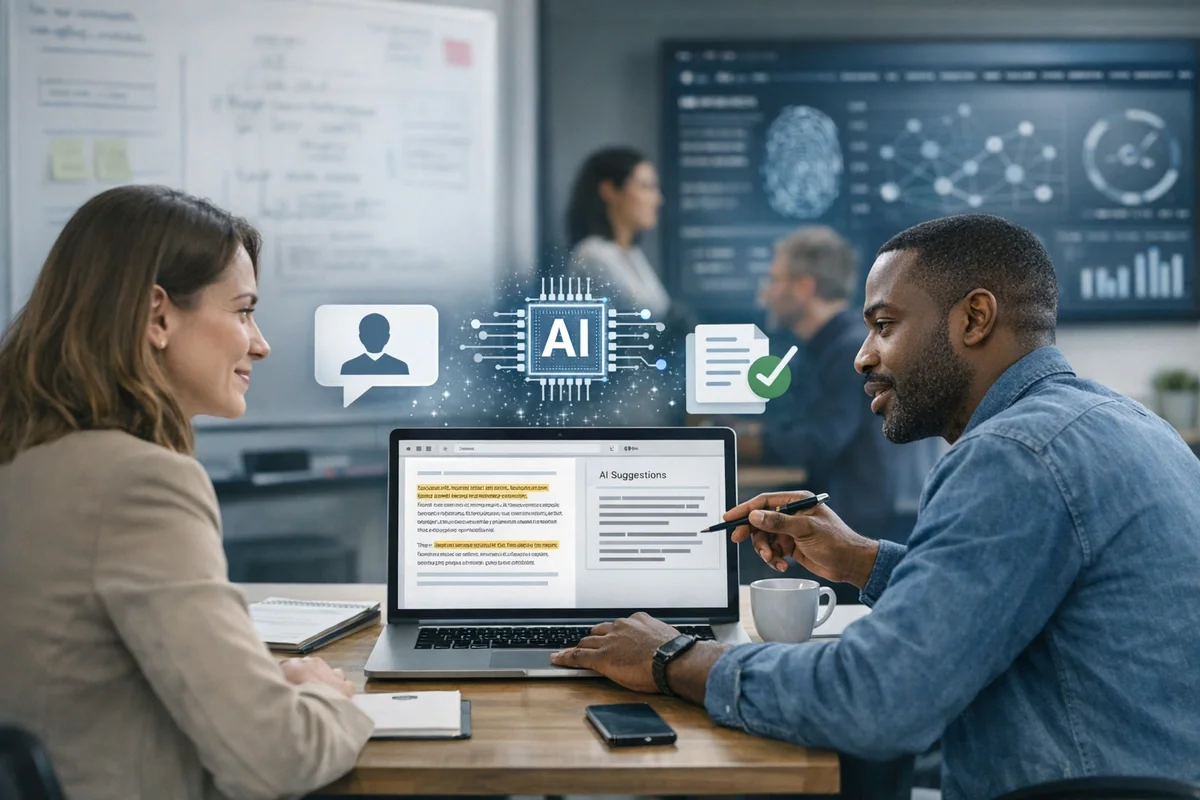
Notably, most people aren’t opposed to AI assistance. The emerging truth is that AI-assisted content is acceptable when human-reviewed. Not AI alone. Not humans alone. Hybrid. AI-exclusive content isn’t trustworthy, but human-only content can’t keep up. Hybrid content is here to fill the gap.
In this piece, we dig deep into the evidence behind hybrid content. We’ll also look into how it gains a psychological edge and ways that you can design your content operations to leverage that advantage at scale.
The Trust Problem You’re Feeling (And Your Audience Is, Too)
AI isn’t perfect, and your audience knows it. They’ve come across articles with factual mistakes or information that doesn’t hold up. If content feels automated, they become very skeptical, especially when they’re about to make an important decision.
On the other hand, your team faces real constraints. A human-only team struggles to produce content fast enough to keep pace with evolving trends. Sometimes, producing every piece of content entirely by hand just isn’t practical.
That puts you between a rock and a hard place. If you lean too much into AI, there’s a chance of losing credibility. If you rely solely on manual writing, you’ll spend too much and fail to publish consistently.
Yet the solution is to pick one approach over the other. Combine AI's efficiency with human expertise and get the best of both worlds. In other words, hybrid content.
The Psychology Behind the Trust
Sure, facts and stats are important. But accuracy alone won’t build trust. Elements like transparency and empathy are the magic that make your content trustworthy. Across industries, research shows AI plus human oversight outperforms either alone.
Expertise with a Warm Touch Wins
Now, there’s no doubt that AI is able to churn out a piece quickly. It sees patterns and processes info quickly. But it is not warm and empathetic, and humans provide context and moral intuition. That’s what makes content feel like someone actually thought about the advice instead of just hitting the “Generate” button.
A study by the Reuters Institute shed some light on trustworthiness. Audiences seem to prefer journalism produced by reporters using AI over stories created only by AI.
Accountability Beats Autonomy
Systems are more trustworthy if a human is in charge. If the audience knows that a human reviewed the content to weed out errors, they feel safer relying on it.
Lee and See's work on trust in automation shows that transparency and human oversight have led people to rely on automated systems.
Error Tolerance Is Asymmetric
We forgive people more than we forgive machines. If you ever used a bot and it made up information, that leaves an impression. Looking at “algorithm aversion” studies, it's clear that once AI makes a visible mistake, people become much more cautious about trusting it again.
Research by Berkeley Dietvorst backs this up by showing that giving people some level of human control or oversight makes them far more willing to accept AI-generated content.
Explainability Calms Uncertainty
When you link to sources, explain the process of reviewing an article, or disclose where AI was used, that’s honesty. It’s what makes people feel more comfortable.
Nielsen Norman Group reached a similar conclusion in its UX research. If organizations are upfront about how AI fits into the content creation process, the audience responds more positively.
Better Writing Creates Trust
If the content is robotic and repetitive, it loses credibility. Human editors shine here by tuning cadence and narrative so that articles flow naturally.
How Does a Hybrid Workflow Actually Look Like?
Hybrid workflows are all about balancing reliance on AI efficiency and human empathy. You use each where it adds the most value.
- Plan: Start by using AI to keep tabs on content opportunities and gaps. It’s a strategist who never sleeps and can write awesome outlines.
- Select an approach: Reserve human-led pieces for high-stakes content, AI-led articles for structured formats, and hybrid for all other works.
- Draft: Use AI to create the first draft, ensuring data points and sources are present
- Review: Have human editors and subject matter experts verify all info and add human experience POV.
- Check quality: Run a test to check tone, bias, links, dates, and numbers. Remember to mention where AI was used.
- Publish: Include a human byline and a one-liner on AI assistance. Cite your sources and leave an open channel for corrections.
- Learn: Look at the metrics – engagement and search – and use the insights to improve your workflow.
How Scripted Operationalizes Hybrid Trust
At Scripted, the philosophy is simple: the future of content is AI plus human. Our platform is purpose-built to help you leverage hybrid content.
- Strategic Agents analyze your site, competitors, and search trends to recommend what to publish next.
- Content Weighting Engines determine whether each piece is best suited for AI, a human writer, or a hybrid workflow.
- AI helps accelerate research and drafting, while over 10,000 vetted writers and editors review every AI-assisted piece for accuracy and brand voice.
- Every article includes clear visibility into where AI contributed and where human review took place.
- Performance data and SEO outcomes feed back into the platform, helping improve the content strategy.
Build Your Hybrid Advantage This Quarter
Building trust is about knowing where people and AI each add the most value, documenting that process, and refining it as you learn what your audience loves. Trust has become the scarcest resource in content.
If you’ve felt the tension between speed and sincerity, hybrid is your release valve. Let machines do what they’re great at. Let people do what only people can. And make the collaboration visible.
Generate your intelligent calendar and see what your AI agents recommend. Our human experts refine it into content your audience will actually trust.